


A Week Below Annapurna

-

-

10 days
-

Kathmandu/Kathmandu
-

people
Discover the breathtaking beauty of Nepal with an unforgettable 10-day journey, A Week Below Annapurna. This adventure takes you through the stunning foothills of the legendary Annapurna Region, offering a perfect blend of mountain biking, cultural exploration, and scenic landscapes. Ideal for adventure seekers and nature lovers, this itinerary provides an immersive experience in one of the world’s most iconic trekking and biking destinations.
Your journey begins in Kathmandu, a vibrant city rich in history, culture, and UNESCO World Heritage Sites. After exploring ancient temples, bustling markets, and local cuisine, you head towards Pokhara, the gateway to the Annapurna region. Known for its serene lakes and panoramic mountain views, Pokhara sets the tone for the adventure ahead.
From Pokhara, the real journey begins as you ride through diverse terrains lush forests, terraced farmlands, and traditional villages. The trails below the Annapurna range offer a mix of challenging uphill climbs and thrilling downhill rides, making it a paradise for mountain biking enthusiasts. Along the way, you’ll witness stunning views of peaks like Annapurna South and Machhapuchhre, creating a truly awe inspiring backdrop.
This 10 day itinerary is not just about biking it’s also a cultural journey. You’ll pass through charming Gurung and Magar villages, where you can experience authentic Nepali hospitality, local traditions, and delicious home-cooked meals. Overnight stays in teahouses and lodges provide a comfortable and immersive way to connect with the local lifestyle.
One of the highlights of the trip is riding through scenic trails that lead to viewpoints offering breathtaking sunrise and sunset vistas over the Himalayas. The peaceful environment, combined with the thrill of biking, creates a unique and rejuvenating experience.
Safety and support are key components of this adventure. With experienced guides, well-planned routes, and support vehicles where accessible, you can focus on enjoying the journey without worry. Whether you are an experienced rider or an enthusiastic beginner with good fitness, this trip can be tailored to suit your pace and skill level.
The best time to embark on this journey is during spring (March to May) and autumn (September to November), when the weather is clear, and the mountain views are at their best.
A Week Below Annapurna 10 Days is more than just a biking trip it’s a journey into the heart of Nepal’s natural beauty and cultural richness. From the bustling streets of Kathmandu to the tranquil trails of the Annapurna foothills, every moment is filled with adventure, discovery, and unforgettable memories.
Minimum 02 pax sharing: Cost 860 US$ per person.
Itinerary
-
Day 1
Arrive in Kathmandu
Meals – None
Arriving in Kathmandu on a clear day is a breathtaking experience. As your flight descends into the valley, you are greeted by panoramic views of the majestic Himalayan range, with snow-capped peaks stretching endlessly across the horizon. This unforgettable first impression sets the tone for your Nepal adventure.
Upon arrival at Tribhuvan International Airport, our representative will warmly welcome you and transfer you to your designated hotel. After check-in, you will receive a detailed briefing about your upcoming journey, ensuring you are well prepared for the days ahead.
Overnight at Hotel
-
Day 2
Kathmandu Sightseeing Tour
Meals: Breakfast
After breakfast, embark on a cultural exploration of Kathmandu Valley’s most iconic heritage sites.
Kathmandu City – Kathmandu Durbar Square
Explore the historic heart of the city, once known as Kantipur. Visit the ancient Kasthamandap temple, believed to be built from a single tree, and admire the intricate architecture of temples and palaces. The former royal palace complex and shrines like Seto Machhindranath reflect Nepal’s rich cultural and spiritual heritage.
Swayambhunath Stupa
Perched atop a hill, this ancient Buddhist stupa is over 2,000 years old. Its iconic all-seeing eyes of Buddha gaze across the valley. Surrounded by prayer flags, shrines, and monasteries, it also offers sweeping panoramic views of Kathmandu.
Patan City – Patan & Patan Durbar Square
Located just south of Kathmandu, Patan is renowned for its exquisite craftsmanship. Discover a city filled with temples, courtyards, and artistic masterpieces. The Patan Durbar Square complex showcases centuries-old Newari architecture and houses a remarkable museum.
Overnight at Hotel
-
Day 3
Fly to Pokhara / Trek to Birethanti (1075m)
Meals: Breakfast, Lunch, Dinner
Enjoy a scenic 30-minute flight to Pokhara, offering stunning aerial views of the Himalayas, including the towering Manaslu and the Annapurna range.
From Pokhara, drive through the picturesque Modi Khola Valley to Nayapul. Begin your trek with a gentle walk through lush forests and riverside trails leading to Birethanti—a charming village with teahouses, shops, and warm local hospitality.
Overnight at Local Lodge
-
Day 4
Trek to Ghandruk (1940m)
Meals: Breakfast, Lunch, Dinner
Today’s trek takes you through terraced fields, forests, and traditional settlements. Crossing suspension bridges and scenic landscapes, you arrive at Ghandruk a beautiful Gurung village renowned for its cultural richness and stunning mountain views.
Enjoy breathtaking panoramas of Annapurna South, Machhapuchhre, Gangapurna, and Hiunchuli.
Overnight at Local Lodge
-
Day 5
Trek to Tadapani (2540m)
Meals: Breakfast, Lunch, Dinner
Descend through lush rhododendron forests and cross sparkling mountain streams before ascending steadily toward Tadapani. The trail offers serene natural beauty and rewarding views of the Annapurna range.
After approximately three hours of trekking, reach Tadapani and relax while soaking in magnificent mountain vistas.
Overnight at Local Lodge
-
Day 6
Trek to Ghorepani (2880m)
Meals: Breakfast, Lunch, Dinner
Today’s trek features a mix of steep climbs and enchanting forest trails. Passing through Deorali and alpine landscapes, you continue toward Ghorepani a popular stop for trekkers.
Surrounded by rhododendron forests and mountain scenery, Ghorepani offers comfortable lodges and a welcoming atmosphere.
Overnight at Local Lodge
-
Day 7
Trek to Hille via Poon Hill
Meals: Breakfast, Lunch, Dinner
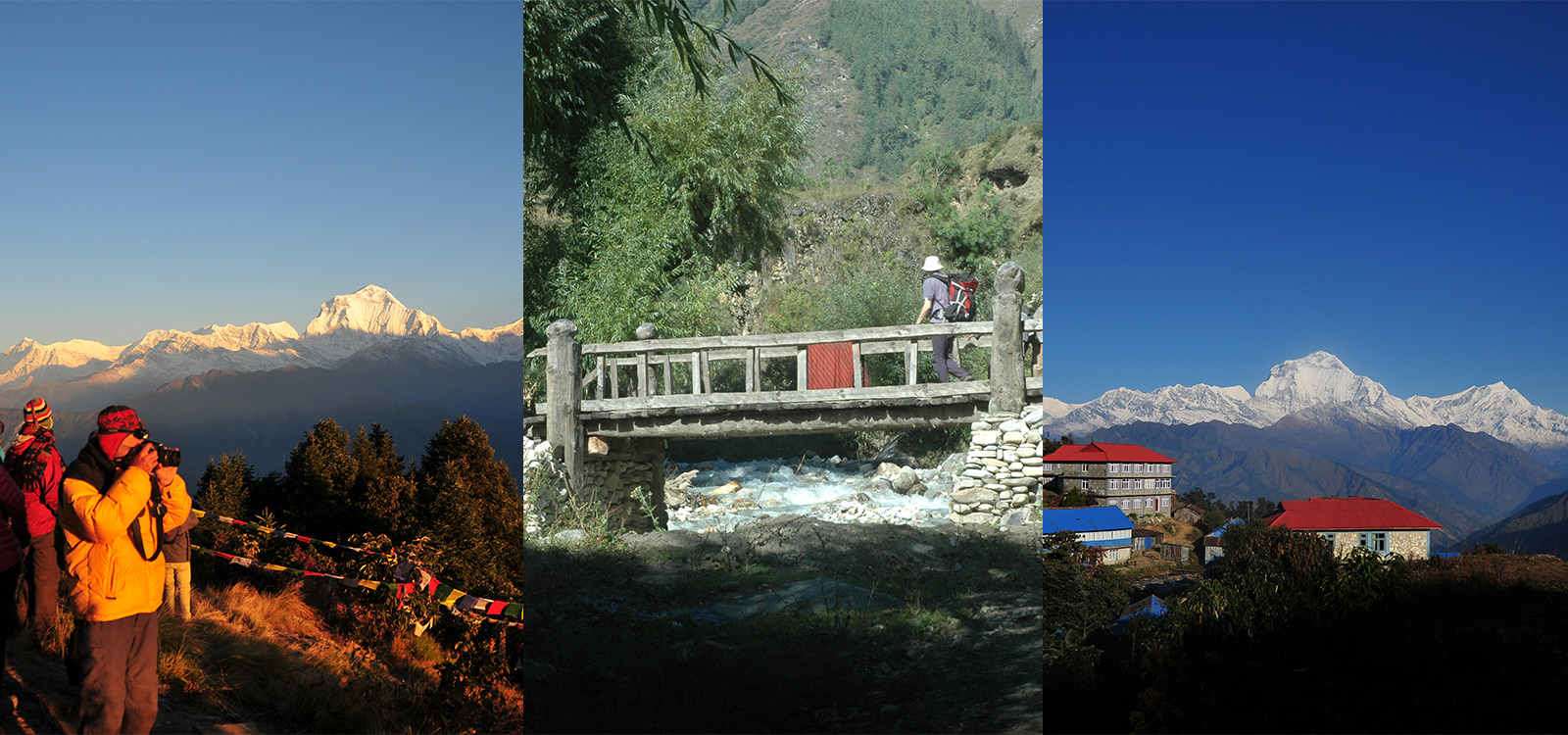
Begin early with a hike to Poon Hill (3195m), one of Nepal’s most famous viewpoints. Witness a spectacular sunrise over the Himalayas, including views of Dhaulagiri and surrounding peaks.
Afterward, descend through forests and villages, including Ulleri with its iconic stone steps, eventually reaching Hille along the Bhurungdi Khola.
Overnight at Local Lodge
-
Day 8
Trek to Nayapul / Drive to Pokhara
Meal: Breakfast
Enjoy a short trek descending through terraced fields and wooded hillsides to Nayapul. From there, drive back to Pokhara and check into your hotel.
Pokhara is a city of remarkable natural beauty, nestled beside tranquil lakes and framed by the Himalayas. The serene Phewa Lake and vibrant Lakeside area offer relaxation, shopping, and exploration opportunities.
Overnight at Hotel
-
Day 9
Drive back to Kathmandu
Meals: Breakfast
After breakfast, drive back to Kathmandu through scenic countryside landscapes. Upon arrival, transfer to your hotel.
Spend your leisure time exploring Thamel, known for its vibrant shops, cafes, and souvenirs, or simply relax at your hotel.
Overnight at Hotel
-
Day 10
Departure
Meals: Breakfast
Your memorable journey in Nepal concludes today. Our representative will transfer you to the airport for your departure flight.
Leave with unforgettable memories of the Himalayas, rich culture, and warm hospitality that define Nepal an experience that truly lasts a lifetime.
Map


