


Golden Triangle

-

-

8 days
-

Kathmandu/Kathmandu
-

10 +Pax
The Himalayan Golden Triangle is one of Nepal’s most enriching travel experiences, offering a perfect blend of culture, heritage, wildlife, and natural beauty. This thoughtfully designed journey connects three of Nepal’s most iconic destinations—Kathmandu, Chitwan National Park, and Pokhara—each offering a unique perspective of the country’s diverse landscapes and traditions.
The journey begins in the Kathmandu Valley, a UNESCO World Heritage region renowned for its ancient temples, palaces, and sacred shrines. Here, travelers step back in time as they explore centuries-old Durbar Squares, intricately carved temples, and spiritual landmarks that reflect Nepal’s rich cultural and religious heritage. The valley once witnessed the rise of medieval kingdoms and later the unification of Nepal under King Prithvi Narayan Shah, a turning point in the nation’s history. Today, Kathmandu stands as a living museum where Hinduism and Buddhism coexist harmoniously, offering visitors a deep insight into Nepal’s spiritual and historical legacy.
From the cultural heart of Nepal, the journey continues to the wild plains of Chitwan National Park, one of Asia’s finest wildlife reserves. This UNESCO-listed park is home to an incredible variety of flora and fauna, including the endangered one-horned rhinoceros, spotted deer, wild boar, and the elusive Royal Bengal tiger. Visitors can enjoy thrilling jungle safaris, bird watching, canoe rides, and a visit to the elephant breeding center. The lush forests, grasslands, and river ecosystems of Chitwan provide an unforgettable wildlife experience that contrasts beautifully with the cultural richness of Kathmandu.
After the jungle adventure, the tour proceeds towards Pokhara, a breathtaking lake city nestled beneath the Annapurna mountain range. The scenic drive to Pokhara passes through green hills, rivers, and traditional villages, offering glimpses of rural Nepali life. Pokhara is known for its serene lakes, especially Phewa Lake, where boating amidst reflections of snow-capped peaks creates a truly magical experience. The city also offers stunning viewpoints, caves, waterfalls, and panoramic Himalayan vistas, making it a paradise for nature lovers and adventure seekers alike.
The Himalayan Golden Triangle Tour perfectly captures the essence of Nepal—its ancient civilization, untouched wilderness, and awe-inspiring natural beauty. From historic cities and sacred temples to dense jungles and tranquil lakes, this journey offers a complete and unforgettable Himalayan experience, making it one of the most sought-after travel circuits in South Asia.
Itinerary
-
Day 1
Arrival in Kathmandu
Upon arrival in Kathmandu, enjoy a spectacular aerial view of the Himalayan range as you descend into Nepal’s vibrant capital city. After landing, you will be warmly welcomed by our representative and transferred comfortably to your hotel.
Check in at the hotel and spend the rest of the day at leisure, relaxing after your journey or exploring the surroundings at your own pace.
Overnight at Hotel
-
Day 2
Sightseeing Tour of Kathmandu Valley
After breakfast at the hotel, begin a full-day guided sightseeing tour of some of the most iconic cultural and spiritual landmarks in the Kathmandu Valley, including Bhaktapur Durbar Square, Pashupatinath Temple, and Boudhanath Stupa.
Bhaktapur Durbar Square
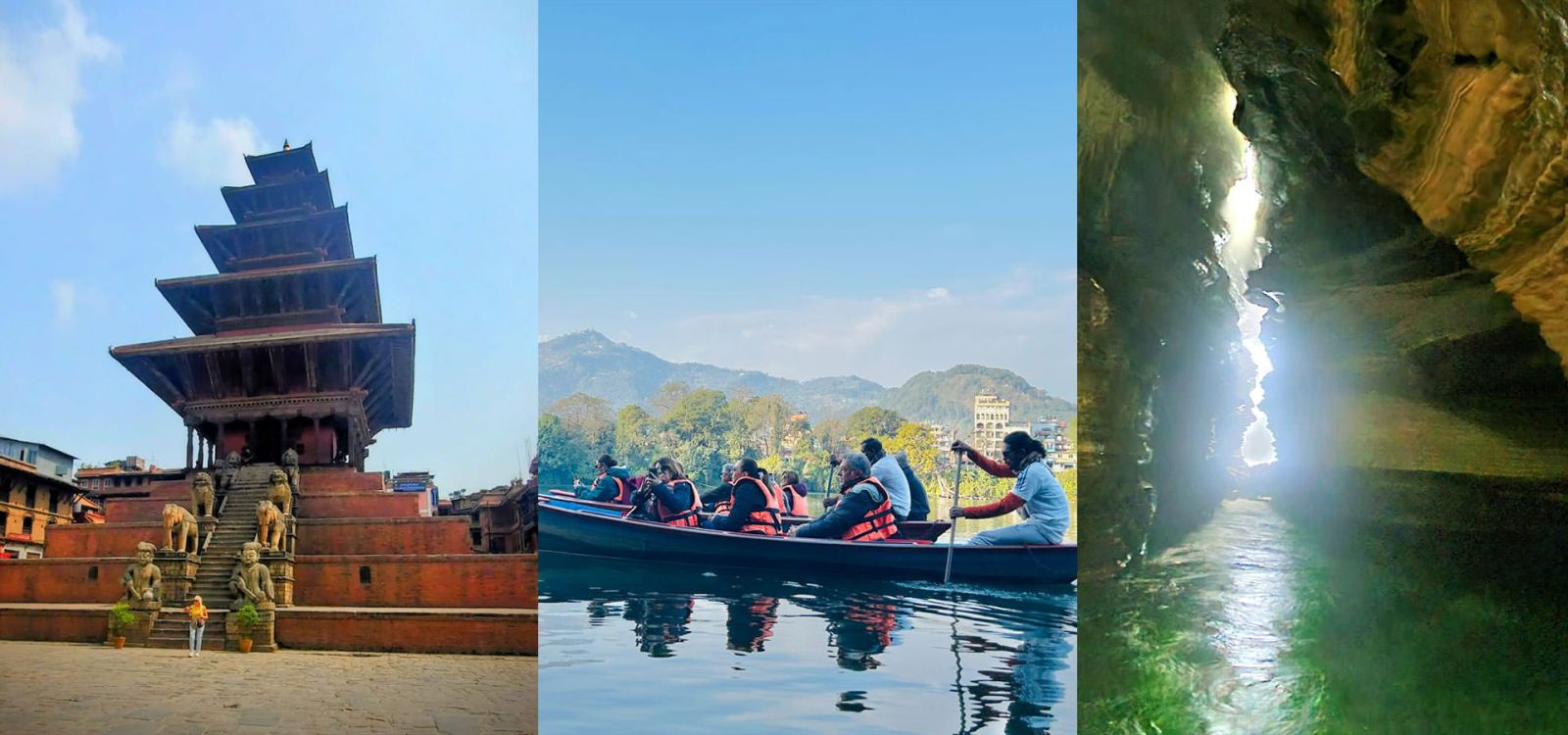
Explore Bhaktapur, famously known as the “City of Devotees,” a living museum of medieval art, culture, and architecture. Located about 14 km from Kathmandu, this ancient city dates back to the 9th century and is shaped like a conch shell. The Durbar Square showcases remarkable heritage structures such as the 55-Window Palace built by King Bhupatindra Malla. The highlight is the magnificent Nyatapola Temple, a five-storied pagoda-style masterpiece adorned with intricate sculptures and guardian figures, making it one of the finest examples of traditional Nepalese architecture.
Pashupatinath Temple
Continue to Pashupatinath Temple, one of the most sacred Hindu shrines dedicated to Lord Shiva, dating back to around 400 A.D. Situated on the banks of the holy Bagmati River, this UNESCO World Heritage Site is an important pilgrimage destination for Hindus worldwide. Built in traditional pagoda style with a gilded roof and beautifully carved silver doors, the temple complex also offers insight into Hindu rituals, including cremation ceremonies performed along the riverbanks.
Boudhanath Stupa
Proceed to the magnificent Boudhanath Stupa, one of the largest and most important Buddhist monuments in the world. Standing at 36 meters tall, this massive structure is a spiritual center for Tibetan Buddhism in Nepal. The stupa is surrounded by monasteries, prayer wheels, and vibrant local settlements, creating a peaceful and spiritual atmosphere. Pilgrims and visitors circumambulate the stupa while spinning prayer wheels, making it one of the most serene and sacred sites in Kathmandu.
After completing the sightseeing tour, return to the hotel.
Overnight at Hotel
-
Day 3
Drive to Kurintar, Rafting on Trishuli River & Continue to Chitwan
After an early breakfast, depart for Kurintar, enjoying a scenic drive of approximately 4 hours through hills, rivers, and rural landscapes of Nepal. Upon arrival, meet your experienced river guide for a thrilling white-water rafting adventure on the Trishuli River.
Experience exciting rapids such as Twin Rock, Ladies Delight, and Upset, which offer a perfect mix of adventure and natural beauty. As you navigate the river, enjoy stunning views of lush valleys, terraced hills, and diverse geological formations that make this rafting journey both scenic and exhilarating.
After completing the rafting activity, continue your drive towards Chitwan, located in the fertile lowland Terai region of Nepal.
Chitwan National Park, established in 1973, is Nepal’s first national park and a UNESCO World Heritage Site, renowned for its rich biodiversity and natural beauty. Unlike the mountainous regions, Chitwan offers a completely different landscape of dense forests, grasslands, and river ecosystems.
Situated at just 150 meters above sea level, Chitwan experiences a warm and tropical climate. The park is home to diverse wildlife, including the one-horned rhinoceros, deer, crocodiles, and various bird species, making it one of Asia’s most important wildlife destinations.
Upon arrival, enjoy lunch followed by optional wildlife activities as guided by a naturalist.
Check in at the lodge and spend the evening at leisure.
Overnight at Lodge
-
Day 4
Jungle Activities in Chitwan
Spend a full day immersed in the rich wildlife and natural beauty of Chitwan National Park, enjoying a variety of guided jungle activities led by experienced naturalists.
Elephant Safari
Experience a unique jungle safari on the back of an elephant, guided by a trained mahout through dense forest trails. This traditional safari offers an excellent opportunity to observe wildlife up close, including deer, rhinos, and various bird species, while exploring areas inaccessible by vehicle or foot.
Elephant Briefing
Attend an informative session about elephants conducted by expert naturalists. Learn about the behavior, habits, and differences between Asian and African elephants, and gain insight into their care and conservation. Guests may also learn basic riding techniques during this session.
or
Elephant Breeding Center
The Elephant Breeding Center Visit in Nepal, located near Chitwan National Park, is a popular wildlife conservation site dedicated to the breeding and protection of endangered Asian elephants. Visitors can observe baby elephants, learn about their care, feeding habits, and conservation efforts in a natural, eco-friendly environment. It is an ideal stop during a Chitwan jungle safari, offering an educational and memorable wildlife experience for nature lovers and travelers.
Gharial Breeding Center
The Gharial Breeding Center, located near the banks of the Rapti River in the buffer zone of Chitwan National Park, is one of Nepal’s most important conservation facilities dedicated to protecting the critically endangered Gharial crocodile (Gavialis gangeticus). Managed under Nepal’s wildlife conservation programs, this center plays a vital role in breeding, rearing, and releasing gharials back into their natural river habitats.
Bird Watching
Chitwan is a paradise for bird lovers, with over 450 species recorded. Guided bird-watching excursions offer the chance to spot rare and colorful birds such as hornbills, kingfishers, and storks in their natural habitat.
Dug-Out Canoe Ride
Enjoy a peaceful canoe ride along the Rapti River in a traditional wooden canoe. This serene journey offers close encounters with crocodiles, aquatic birds, and the tranquil beauty of the river ecosystem.
Nature Walk
Take a guided jungle walk through subtropical forests, where you may encounter wildlife such as deer, rhinos, and sloth bears. Naturalists also share insights into the region’s unique flora and fauna.
Tharu Cultural Dance
In the evening, enjoy a vibrant Tharu Stick Dance performance by local villagers, showcasing the traditional culture and rhythm of the indigenous Tharu community. Guests are welcome to join and experience the lively atmosphere.
Slide Show Presentation on Flora & Fauna
End the day with an educational presentation about Chitwan’s biodiversity, wildlife conservation, and ecosystem.
Overnight at Lodge
-
Day 5
Drive to Pokhara (169 km / 5–6 Hours)
After breakfast, embark on a scenic drive to Pokhara along the Prithvi Highway, covering approximately 169 km in 5–6 hours. The journey offers captivating views of Nepal’s diverse landscapes, including the flowing Trishuli River, terraced farmlands, traditional villages, and lush green hills. On clear days, travelers are rewarded with spectacular glimpses of Himalayan peaks such as Himalchuli, Dhaulagiri, Annapurna range, and the iconic Machhapuchhre (Fishtail Mountain).
Upon arrival in Pokhara, check in at the hotel and spend the rest of the day at leisure or enjoy an optional boating experience on Phewa Lake./p>
You may spend the evening relaxing by the lakeside or enjoy optional boating on Phewa Lake.
Boating at Phewa Lake
Phewa Lake is the heart of Pokhara and the city’s most popular attraction, offering a peaceful escape surrounded by natural beauty. As Nepal’s second-largest lake, it covers an area of approximately 4.43 sq. km and features calm, emerald-green waters ideal for boating and relaxation.
The northern lakeside area, known as Lakeside, is a vibrant tourist hub filled with hotels, restaurants, cafes, and shops, making it one of the most visited areas in Nepal. In contrast, the southwestern side of the lake offers a serene natural environment with forested hills and abundant birdlife.
A traditional boat ride on Phewa Lake allows visitors to experience breathtaking reflections of the Annapurna and Machhapuchhre mountain ranges shimmering on the water’s surface. The peaceful atmosphere, combined with panoramic Himalayan views, makes boating on Phewa Lake an unforgettable highlight of any Pokhara visit.
Overnight at Hotel
-
Day 6
Sightseeing in Pokhara
Begin your day early with an unforgettable sunrise tour to Sarangkot. Around 05:00 AM (as advised by your guide), drive to Sarangkot, a scenic hilltop located about 9 km from Pokhara city. Perched at an altitude of 1,592 meters, Sarangkot is one of the most popular viewpoints in Nepal, offering a breathtaking panoramic view of the Annapurna Himalayan range, stretching from east to west. As the first rays of the sun illuminate the snow-capped peaks, the entire landscape transforms into a golden spectacle. From this vantage point, you can also admire the sweeping views of Pokhara Valley, Phewa Lake, and surrounding traditional villages nestled beneath the mountains.
After enjoying the sunrise experience, return to the hotel for breakfast. Later, continue your sightseeing tour of Pokhara, exploring some of its most iconic cultural and natural attractions.
Early Morning Sunriesr Tour to Sarangkot
Start early around 05:00 AM for a sunrise tour to Sarangkot near Pokhara. Enjoy stunning Himalayan views of the Annapurna range, Pokhara Valley, and Phewa Lake from 1,592m elevation. After sunrise, return to the hotel for breakfast, then proceed for a Pokhara city sightseeing tour.
Gupteshwar Cave
Visit the Gupteshwar Cave, one of the most fascinating limestone caves in the region, known for its natural formations and spiritual significance. Inside the cave lies a sacred shrine dedicated to Lord Shiva, attracting both pilgrims and travelers alike.
Devi’s Fall (Patale Chhango)
Next, proceed to Devi’s Fall (Patale Chhango), a spectacular waterfall where the water mysteriously disappears into an underground tunnel. Located near the Pokhara airport, this natural wonder is surrounded by scenic beauty and local legends.
Bindhyabasini Temple
Continue to the Bindhyabasini Temple, one of the oldest and most revered Hindu temples in Pokhara. Dedicated to Goddess Bhagwati (an incarnation of Kali), the temple holds deep religious significance and offers a peaceful ambiance along with beautiful views of the surrounding hills.
Tibetan Refugee Camp (Tashi Palkhel)
Later, visit the Tibetan Refugee Camp (Tashi Palkhel), a culturally rich settlement established in 1962. Here, you can observe the traditional lifestyle of Tibetan refugees, explore handicraft workshops, and learn about their history and culture. The camp is also known for its handwoven carpets and souvenir production, reflecting their craftsmanship and resilience.
After completing the sightseeing tour, return to your hotel and check in.
Overnight stay at Hotel in Pokhara.
-
Day 7
Fly to Kathmandu (25 min)
After breakfast at the hotel, transfer to Pokhara Airport for a short scenic flight back to Kathmandu. The 25-minute flight offers spectacular aerial views of the Himalayan ranges and lush valleys below, making your journey both quick and memorable.
Upon arrival in Kathmandu, you will be transferred to your hotel. The remaining time of the day is free for you to explore the city at your own pace. You may choose to go shopping, visit nearby cultural sites, relax at your hotel, or simply enjoy the vibrant atmosphere of the capital city.
Overnight at the Hotel.
-
Day 8
Final Departure
After breakfast at the hotel, you will be transferred to the airport for your onward journey.
We ensure that you leave Nepal with wonderful memories and an unforgettable travel experience. Our representative will assist you with your departure and ensure timely transfer to the airport for your flight back home.
End of Tour.


